Seperti yang sudah lama diberitakan, startup energi rumahan Sense akhirnya keluar dari pasar perangkat keras langsung ke konsumen, dan bertransisi sepenuhnya ke model yang hanya berbasis perangkat lunak dan berbasis utilitas.
Mulai bulan Januari, perusahaan tidak lagi menjual monitor energi fisik rumah. Sebaliknya, perusahaan ini berupaya keras untuk menanamkan perangkat lunak Sense – yang melakukan jutaan pengukuran per detik – ke dalam smart meter. Transisi ini adalah transisi yang telah diupayakan oleh Sense, dan pemain lain di bidang ini, termasuk perusahaan rintisan dan pelaku industri lama, selama bertahun-tahun.
Pergeseran ini sebagian didorong oleh tantangan besar yang dihadapi oleh pemantau energi konsumen dalam bentuk biaya awal yang tinggi dan persyaratan pemasangan yang rumit sehingga membatasi penerapannya. Dan ini bukan hanya perangkat keras pemilahan energi; Pembuat panel pintar Span juga beralih ke utilitas, menyadari bahwa skala hanya dapat dicapai melalui operator jaringan yang mengendalikan peningkatan dan infrastruktur.
Bagi Sense, CEO Mike Phillips menjelaskan, pivot kini menjadi mungkin karena dua alasan. Pertama, smart meter yang didukung AI mulai menjangkau jaringan listrik dalam skala besar; Sementara itu, perusahaan utilitas sendiri berada di bawah tekanan yang semakin besar untuk bersandar pada visibilitas tepi jaringan dan manajemen sisi permintaan karena mereka bergulat dengan pertumbuhan beban dan kemacetan pada jaringan distribusi.
Memberikan tingkat visibilitas terhadap penggunaan energi rumah tangga dalam skala besar tidak dapat terwujud kecuali perusahaan utilitas telah mengadopsi infrastruktur yang tepat, kata Phillips, yaitu smart meter. Mengingat persyaratan mendasar tersebut, penarikan Sense dari perangkat keras sebenarnya adalah soal waktu: “Tidak ada perusahaan utilitas yang akan menghapus meteran yang ada dan memasang meteran baru hanya untuk melakukan hal ini, jadi kami harus menangkap semua perusahaan utilitas pada waktu yang tepat dalam siklus penggantian meterannya,” jelasnya.
Revolusi smart meter telah diprediksi selama beberapa dekade, namun tidak pernah sepenuhnya terwujud. Sebagian besar penerapan awal berasal dari dorongan pemerintah federal pada tahun 2009 untuk mengembangkan infrastruktur pengukuran yang canggih. Namun, peningkatan tersebut lebih bersifat fungsional daripada cerdas — dirancang untuk penagihan otomatis atau deteksi pemadaman listrik — dan perusahaan utilitas tidak dapat sepenuhnya memanfaatkan data yang mereka kumpulkan. Namun saat ini sudah ada generasi baru meter pintar pintar yang hadir di jaringan listrik, termasuk lebih dari 3,7 juta meter yang sudah dilengkapi dengan perangkat lunak Sense.
Pelanggan perusahaan utilitas, termasuk National Grid, berada di negara bagian yang tidak memasang smart meter generasi pertama, sehingga mereka “melompati” negara bagian yang memasang smart meter. Kini, perusahaan ini berfokus di California, tempat perusahaan utilitas merupakan pengguna awal meter pintar generasi pertama, dan sedang bersiap untuk meningkatkan ke generasi berikutnya.
“Saya ingin menegaskan kembali betapa besar perubahan yang terjadi dibandingkan smart meter sebelumnya,” tambah Phillips. “Industri sedang meningkatkan infrastruktur generasi berikutnya. Setelah infrastruktur ini mencapai skala besar, kami dapat melihat keseluruhan jaringan distribusi secara real-time dari edge.” Visibilitas tambahan tersebut – dan secara teori, melalui program respons permintaan, pengendalian – pada akhirnya akan menghemat uang konsumen untuk hal-hal seperti feeder, saluran listrik, dan trafo, kata Phillips.
Mempertahankan fokus pelanggan
Phillips yakin bahwa Sense tidak sepenuhnya meninggalkan model langsung ke konsumen. Konsumen yang memiliki smart meter yang dilengkapi Sense di rumah mereka akan tetap dapat menggunakan aplikasi Sense untuk melacak konsumsi listrik langsung. Sense juga tidak memberi label putih pada aplikasinya, untuk menjaga jarak antara pelanggan dan utilitas mereka.
“Privasi dan kepercayaan konsumen sangatlah penting,” kata Phillips. “Hal ini memberikan sedikit jarak bagi utilitas dari jenis detail yang kami miliki di dalam rumah, namun dengan keikutsertaan konsumen…kami dapat berbagi berbagai kumpulan data dengan utilitas.”
Untuk saat ini, utilitas sebagian besar tertarik pada manfaat sisi jaringan dari platform seperti Sense, kata Phillips, dibandingkan dengan sisi dalam negeri. “Kami melakukan model berlangganan untuk menjalankan platform Sense dan berbagai kasus penggunaan di sisi jaringan listrik, sehingga utilitas membayar kami secara berkelanjutan untuk berbagai layanan, yang cenderung berupa masukan data ke sistem lain,” jelasnya.
Pengisian daya yang dikelola EV: Menemukan desain program yang berfungsi
Belajar dari para pemimpin di APS, Evergy, SMECO, dan EnergyHub tentang berbagai pendekatan yang dapat dilakukan perusahaan utilitas untuk merancang program pengisian daya terkelola yang skalabel, hemat biaya, dan ramah pelanggan.
LIHAT SEKARANG
Fokus pada sisi jaringan listrik adalah sesuatu yang menurut Phillips tidak hanya dilihatnya di bidang utilitas, tetapi juga di dunia investor. “Saya menghabiskan banyak waktu dengan investor dan VC dan saya selalu tergila-gila ketika mereka mengatakan 'Jadi bagaimana jika saya menghemat $50 sebulan untuk tagihan saya?'”
Konsumen sangat peduli dengan penghematan tersebut, dan sekarang lebih dari sebelumnya, tambahnya. Itu sebabnya Sense tidak ingin mengabaikan manfaat teknologinya di sisi konsumen, meskipun menskalakannya secara langsung ke konsumen tidak mungkin dilakukan.
Meskipun demikian, Phillips mengakui bahwa bagaimana tepatnya konsumen akan berinteraksi dengan Sense di masa mendatang masih menjadi pertanyaan terbuka. Dengan semakin banyaknya smart meter generasi baru yang diluncurkan, sangat penting bagi konsumen dan perusahaan utilitas untuk dapat memanfaatkan data dalam jumlah besar yang mereka sediakan.
Dan hal ini lebih dari sekedar penghematan energi: “Hal ini juga memberikan masyarakat visibilitas yang lebih baik terhadap pemadaman listrik dan memberi mereka cara untuk mengetahui bahwa mereka akan memiliki keandalan ketika badai datang,” katanya. “Saya pikir dengan menjadikan jaringan listrik lebih cerdas dapat memberikan manfaat lain bagi konsumen, tidak hanya apakah Anda dapat menemukan sumber energi di rumah Anda.”
The Intel Core i9-14900K might be a generation old at this point, but surprisingly, it is still the fastest gaming CPU that Intel currently has to offer. With that title in its possession, the Core i9-14900K is definitely the CPU that Intel would want to pit against AMD’s cache-laden Zen 5 processors.
Among AMD’s latest and greatest is the Ryzen 9 9900X3D, the closest competitor to the Core i9-14900K in terms of pricing. The Ryzen 9 9900X3D is built on the latest Zen 5 architecture, but wields the power of AMD’s 3D V-Cache technology, an ace that has proven very beneficial for AMD in the gaming division recently.
While it may not make much sense to put one of AMD’s latest flagships against the dated Core i9-14900K at first glance, this is certainly the comparison that gives Intel its best shot at dethroning AMD in this market segment.
We will put the AMD Ryzen 9 9900X3D vs Intel Core i9-14900K CPUs through a rigorous six-round gauntlet to determine which CPU is truly the best in its class, and which one you should spend your money on.
Features and Specifications: AMD Ryzen 9 9900X3D vs Intel Core i9-14900K
The architectural differences between these processors are immediately apparent in their core layouts and thread configurations. The Intel Core i9-14900K employs the Raptor Lake hybrid architecture featuring 24 cores distributed across eight Performance cores (P-cores) based on the Raptor Cove microarchitecture and sixteen Efficiency cores (E-cores) with the Gracemont design.
This configuration supports 32 threads through Intel’s Hyperthreading technology, with P-cores operating at base frequencies of 3.2 GHz and boosting up to 6.0 GHz, while E-cores run at 2.4 GHz base and 4.4 GHz boost.
In contrast, the AMD Ryzen 9 9900X3D features a more traditional homogeneous design with 12 cores and 24 threads, all built on the advanced Zen 5 architecture. Operating at a higher base frequency of 4.4 GHz with boost capabilities reaching 5.5 GHz, the 9900X3D emphasizes consistent per-core performance rather than Intel’s heterogeneous approach.
Get Tom’s Hardware’s best news and in-depth reviews, straight to your inbox.
AMD’s Ryzen 9 9900X3D is manufactured using TSMC’s cutting-edge 4nm process node, while Intel’s Core i9-14900K, conversely, utilizes Intel’s proprietary “Intel 7” process.
Perhaps the most distinctive specification difference lies in the cache architectures, where AMD’s 3D V-Cache technology creates a substantial advantage in cache capacity. The Ryzen 9 9900X3D incorporates AMD’s second-generation 3D V-Cache technology, providing a massive 128 MB of L3 cache through vertical stacking of cache dies. This extra cache boosts gaming performance tremendously.
Intel’s i9-14900K features a more conventional 36 MB of L3 cache combined with 32 MB of L2 cache. While respectable, this pales in comparison to AMD’s cache implementation.
Both processors support modern DDR5 memory standards, though their implementations and platform integrations differ in scope and capability. The Intel Core i9-14900K supports both DDR5-5600 and DDR4-3200 memory configurations, which makes it quite versatile.
The AMD Ryzen 9 9900X3D also supports DDR5-5600 memory with a maximum capacity of 192 GB, but it focuses exclusively on DDR5. AMD’s approach includes 24 PCIe 5.0 lanes directly from the processor, while Intel only offers 20 PCIe 5.0 lanes directly from the CPU.
For power, Intel’s Core i9-14900K specifies a base TDP of 125W but can ramp up to 253W under maximum turbo conditions, while its AMD competitor stays relatively conservative with a TDP of 120W, thanks to its smaller process node.
⭐ Winner: AMD
While it is hard to declare a winner by simply looking at specs on a sheet of paper, the Ryzen 9 9900X3D does look more impressive in this round simply because of the ace up its sleeve: AMD’s 3D V-Cache. Intel doesn’t have anything in its arsenal to match that, at least on paper.
Gaming Benchmarks and Performance: AMD Ryzen 9 9900X3D vs Intel Core i9-14900K
This particular section of the faceoff will focus on the gaming performance of the Ryzen 9 9900X3D and the Core i9-14900K across a variety of games at 1080p. We chose the 1080p resolution in order to minimize the GPU limitations and to maximize the difference in framerates between the various CPUs.
We also chose the formidable RTX 5090 for testing to remove any GPU bottlenecks. You can also check out our in-depth reviews of the two CPUs (linked above) for a more comprehensive analysis.
According to our test results, the Ryzen 9 9900X3D demonstrates a clear advantage in raw gaming performance over the Core i9-14900K.
In the 16-game geometric mean, the 9900X3D achieves a 17.7% lead in average FPS and a 12.6% improvement in 1% lows over the Core i9-14900K.
Of course, this disparity stems primarily from AMD’s 3D V-Cache technology, which drastically reduces latency in cache-sensitive games, allowing the CPU to feed the GPU more efficiently at 1080p.
The picture becomes even clearer when we look at the individual games. In Baldur’s Gate 3 (DX11), the 9900X3D displays a dominant 34% lead over the 14900K. Similarly, Hitman 3 reveals a massive 35% advantage in average FPS. Even in GPU-bound titles like Cyberpunk 2077, the 9900X3D maintains a 9.7% edge in average FPS over its Intel competitor.
Furthermore, the 9900X3D’s superiority in 1% lows is critical for stutter-free gameplay. In The Last of Us Part 1, we found the Ryzen 9 9900X3D to be 3.5% faster in 1% lows, reducing hitches during intense scenes; meanwhile, in other games like Cyberpunk 2077, the 1% lows are more or less evenly matched.
The frametime advantage arises from the 3D V-Cache’s ability to minimize frametime spikes by keeping frequently accessed game assets readily available, whereas the 14900K relies on higher clock speeds and DDR5 bandwidth, which struggle under complex, erratic workloads.
The 9900X3D is significantly more efficient during gaming, consuming 113W on average versus the 14900K’s 130.2W. This results in a 36% higher efficiency rating, as shown by our FPS/W graph. AMD’s chiplet design and TSMC’s 5nm process allow the X3D to deliver higher performance at lower voltages, while Intel’s higher power draw reflects its push for peak frequencies and use of an older process node.
Due to its higher sticker price, the 9900X3D’s value-per-dollar trails the 14900K (0.42 FPS/$ vs. 0.37 FPS/$). Intel’s aggressive pricing gives it a 23% value edge in raw FPS per dollar. However, this metric overlooks platform costs and focuses solely on the CPU price relative to raw gaming performance. We will explore the value conversation a bit deeper later in the article.
Putting it all together, it is clear that the Ryzen 9 9900X3D is the superior gaming CPU, offering ~18% higher average FPS and ~13% smoother 1% lows than the Core i9-14900K, while delivering 36% better efficiency during gaming. It excels in cache-dependent titles and maintains leads even in GPU-bound scenarios.
It trails the Core i9-14900K in FPS-per-dollar in gaming, but that metric doesn’t tell the whole story. Nevertheless, the Ryzen 9 9900X3D takes this round comfortably.
⭐ Winner: AMD
While the 14900K wins on pure FPS-per-dollar and suits users taking a multifunctional approach, those seeking uncompromising gaming performance should choose the Ryzen 9 9900X3D.
Productivity Performance: AMD Ryzen 9 9900X3D vs Intel Core i9-14900K
Image 1 of 10
(Image credit: Tom’s Hardware)
(Image credit: Tom’s Hardware)
(Image credit: Tom’s Hardware)
(Image credit: Tom’s Hardware)
(Image credit: Tom’s Hardware)
(Image credit: Tom’s Hardware)
(Image credit: Tom’s Hardware)
(Image credit: Tom’s Hardware)
(Image credit: Tom’s Hardware)
(Image credit: Tom’s Hardware)
We can see that the 14900K takes a lead that is particularly pronounced in heavily multi-threaded tasks, where Intel’s higher core/thread count and peak clock speeds often outweigh the benefits of AMD’s 3D V-Cache technology, designed primarily for gaming latency reduction.
In multi-threaded productivity, the i9-14900K demonstrates a significant overall edge. Our comprehensive multi-threaded performance ranking geomean places the Core i9-14900K at 547 points, compared to the Ryzen 9 9900X3D’s 499 points, giving Intel a 9.6% performance advantage.
This gap is reflected across key individual benchmarks. In Cinebench 2024 multi-core, the 14900K leads the Ryzen 9 9900X3D by a substantial 17.5%. The difference is even more dramatic in rendering, where POV-Ray multi-core shows the 14900K delivering 28% more performance than the AMD CPU.
Similarly, Blender Classroom performance shows the Intel chip outpaces the AMD part by around 7%, while HandBrake x265 encoding sees a narrower but still present 1.1% Intel lead.
Image 1 of 7
(Image credit: Tom’s Hardware)
(Image credit: Tom’s Hardware)
(Image credit: Tom’s Hardware)
(Image credit: Tom’s Hardware)
(Image credit: Tom’s Hardware)
(Image credit: Tom’s Hardware)
(Image credit: Tom’s Hardware)
Even though the gap narrows, the i9-14900K generally maintains a lead in single-threaded productivity as well. Our single-threaded performance ranking geomean places the 14900K at 266 points and the 9900X3D at 251 points, giving Intel a 6% advantage.
Looking at individual tests, Cinebench 2024 single-core results show the 14900K maintaining a smaller but consistent 1.6% lead over the 9900X3D. Web browsing performance in WebXPRT4 flips the scales in favor of AMD, with a slightly noticeable 2.1% deficit for Intel in this lighter workload.
It is interesting to see that both CPUs are almost at parity in single-threaded workloads, but Intel pulls away significantly in multi-threaded performance. The primary benefit of AMD’s innovative 3D V-Cache lies in gaming, not the diverse productivity tasks measured here.
Based on our thorough testing and benchmark results, the Intel Core i9-14900K is definitely the superior productivity CPU compared to the AMD Ryzen 9 9900X3D. It delivers faster performance across the vast majority of tested productivity benchmarks, particularly in demanding multi-threaded applications where advantages frequently reach double-digit percentages.
While the single-threaded gap is narrower, Intel still holds the edge. Combined with its significantly lower price point, the Core i9-14900K also presents a much stronger value proposition for users prioritizing productivity performance.
The 9900X3D’s strengths clearly lie elsewhere, primarily in gaming scenarios that heavily leverage its large L3 cache.
⭐ Winner: Intel
The Ryzen 9 9900X3D’s massive L3 cache fails to make much of a difference in productivity work, as Intel obliterates the competition with its superior core count and multi-threaded performance.
Overclocking: AMD Ryzen 9 9900X3D vs Intel Core i9-14900K
The Intel Core i9-14900K delivers exceptional overclocking capabilities with full unlocked multiplier support and comprehensive voltage controls. Intel provides sophisticated overclocking tools, including the Intel Extreme Tuning Utility (XTU), which offers AI-assisted overclocking that adapts to individual systems and recommends optimal settings.
The processor supports manual frequency adjustments, voltage tweaking, and per-core ratio controls, allowing enthusiasts to easily push performance cores. Intel’s approach includes advanced voltage offset capabilities through V/F curve manipulation, enabling both positive offsets for higher frequencies and negative offsets for better thermal management.
Meanwhile, the Ryzen 9 9900X3D represents a groundbreaking shift in AMD’s X3D overclocking philosophy. Unlike previous generations, where X3D processors had severely restricted overclocking due to the voltage sensitivity of the 3D V-Cache, the 9900X3D features full overclocking support with unlocked multipliers.
AMD achieved this breakthrough by repositioning the 3D V-Cache underneath the CPU cores rather than on top, significantly improving thermal management. However, the X3D architecture still presents thermal challenges for hardcore overclockers, with users reporting more aggressive thermal throttling and difficulty maintaining high all-core frequencies compared to traditional Ryzen processors.
The processor supports manual frequency adjustments, voltage controls, comprehensive PBO (Precision Boost Overdrive) for automatically boosting power limits, and Curve Optimizer for undervoltingtuning. Users can achieve performance gains through both automatic and manual tuning; however, these gains can be comparatively limited because aggressive out-of-the-box tuning delivers the lion’s share of performance at stock settings.
The X3D processors deliver outstanding gaming performance thanks to 3D V-Cache, but this tech also limits the upside of conventional memory overclocking, particularly when using EXPO profiles. We’ve found sub-2% performance gains from memory tuning with the 9800X3D, which, from a pricing standpoint, is great for enthusiasts; you can buy a cheap memory kit and get nearly the full performance potential. However, this is also a letdown for manual tuning enthusiasts, as the potential upside of tuning is severely limited.
For enthusiasts prioritizing maximum manual overclocking flexibility and extreme overclocking potential, the Intel Core i9-14900K is the ideal choice. Intel’s mature overclocking ecosystem, comprehensive software tools, extensive voltage controls, and proven ability to achieve extreme frequencies make it the preferred platform for serious overclockers.
While the AMD 9900X3D offers impressive gaming performance and newfound overclocking support, its thermal limitations and cache-related constraints make it less suitable for users who want to push absolute performance boundaries through manual tuning.
⭐Winner: Intel
The Intel platform’s superior thermal scaling with exotic cooling and more predictable overclocking behavior ultimately makes it the better choice for dedicated overclocking enthusiasts. It also offers much more meaningful memory overclocking headroom.
The Ryzen 7 9800X3D’s automated boost algorithms deliver nearly peak performance right out of the box, eliminating the need for manual adjustments. The automated PBO feature, paired with undervolting, can provide a simple pathway to performance gains; however, these gains are limited. Additionally, memory tuning yields comparatively smaller gains than with traditional processors, due to the 3D V-Cache’s improvements in memory access.
Power Consumption, Efficiency, and Cooling: AMD Ryzen 9 9900X3D vs Intel Core i9-14900K
Based on our test results, the power consumption profiles of the Ryzen 9 9900X3D and Core i9-14900K reveal fundamentally different design philosophies, with significant implications for efficiency and cooling requirements.
Image 1 of 10
(Image credit: Tom’s Hardware)
(Image credit: Tom’s Hardware)
(Image credit: Tom’s Hardware)
(Image credit: Tom’s Hardware)
(Image credit: Tom’s Hardware)
(Image credit: Tom’s Hardware)
(Image credit: Tom’s Hardware)
(Image credit: Tom’s Hardware)
(Image credit: Tom’s Hardware)
(Image credit: Tom’s Hardware)
Intel holds a slight edge in idle states. The 14900K consumes 26W at full idle, compared to the 9900X3D’s 23W, resulting in a 15% difference. During active light workloads, such as YouTube playback, the gap narrows to 10% but still persists. This suggests Intel’s hybrid architecture manages low-power states marginally better.
Under sustained AVX loads, the divergence is stark, providing a more nuanced picture. In Prime95 Small FFTs test (a worst-case power virus), the 9900X3D averages 162W, while the 14900K draws a massive 359W. This represents a massive 121% increase for Intel.
Similarly, in the y-cruncher AVX test, the 9900X3D consumes 117% less power than the Intel CPU. Even in a more realistic multi-core rendering test like Cinebench 2024, the 14900K consumes 92% more power than the 9900X3D. This immense power draw by Intel is driven by its aggressive boost algorithms, pushing high core counts and clock speeds.
AMD’s 3D V-Cache technology and optimized TSMC node deliver superior efficiency in our benchmarks. In HandBrake x265 encoding, the 9900X3D achieves 6.41 Watts per fps, vastly outperforming the 14900K’s score with 84% better efficiency. This advantage persists in Cinebench 2024, where the 9900X3D delivers 65% better efficiency.
Image 1 of 7
(Image credit: Tom’s Hardware)
(Image credit: Tom’s Hardware)
(Image credit: Tom’s Hardware)
(Image credit: Tom’s Hardware)
(Image credit: Tom’s Hardware)
(Image credit: Tom’s Hardware)
(Image credit: Tom’s Hardware)
The “Estimated Task Energy” chart visually confirms this, placing the 9900X3D significantly lower on the Y-axis (lower energy per task) than Intel’s 14th-gen parts. In the Handbrake x265 scatter plot, the Core i9-14900K delivers roughly the same FPS as the 9900X3D while consuming almost double the task energy.
The 14900K’s extreme power draw, averaging around 330W-360W under load, necessitates robust cooling. High-end 360mm liquid coolers or premium air coolers are essential to prevent thermal throttling and to manage noise. Even custom liquid cooling loops should be considered by those users who can afford and maintain them.
In contrast, the 9900X3D’s peak power draw was found to be between 170W-200W across our benchmarks, which is far more manageable. A high-quality dual-tower air cooler or 240mm AIO is sufficient, reducing system cost, complexity, and noise. Intel’s power spikes also create greater thermal management challenges for motherboard VRMs and case airflow.
At the end of the day, the Ryzen 9 9900X3D is decisively more power-efficient under heavy workloads, consuming roughly half the power of the 14900K in demanding AVX tasks while delivering competitive performance.
While Intel holds a minor idle advantage, AMD’s dramatically lower load power consumption translates directly to easier cooling requirements and lower operational costs.
⭐ Winner: AMD
If you want efficiency, quieter operation, or simpler thermal solutions, the 9900X3D is the better choice. The 14900K’s superior performance in productivity work comes at a steep cost: an immense power draw and challenging cooling demands.
Pricing: AMD Ryzen 9 9900X3D vs Intel Core i9-14900K
When comparing the price of the AMD Ryzen 9 9900X3D ($565) versus the Intel Core i9-14900K ($450), the total cost extends well beyond the CPU price difference. A true cost comparison encompasses the entire platform, including the motherboard, RAM, and CPU cooler.
For the AMD Ryzen 9 9900X3D, you’ll need a motherboard with an AM5 socket —the latest AMD platform. These motherboards start at approximately $125 for basic B650 models, though quality options typically begin around $150-200, and premium X-series options can reach around $500.
On the Intel side, the Core i9-14900K uses the LGA 1700 socket, which has been around longer, making motherboards more affordable and widely available. A mid-range Z-series motherboard, suitable for the 14900K, can be found for $130 to $250. Premium Z790 motherboards can exceed $400-600 for flagship models.
As for RAM, both CPUs support DDR5, which is the modern standard for high-performance systems, though the Intel chip also supports DDR4. To keep performance comparable and align with enthusiast expectations, DDR5 is the way to go for both platforms. A 32GB DDR5 kit (2x16GB), running at speeds like 6000MT/s, typically costs between $100 and $150.
Cooling represents a crucial cost consideration where these two platforms diverge significantly. The AMD Ryzen 9 9900X3D’s 120W TDP and peak power consumption around 160-180W make it relatively manageable with quality air cooling or mid-range AIO solutions. Suitable air coolers range from $40 to $100, while 240mm AIO liquid coolers cost $70 to $120.
The Intel Core i9-14900K presents substantially higher cooling demands due to its 253W maximum turbo power, which can reach nearly 380W under demanding workloads. This necessitates premium cooling solutions, with recommended air coolers starting around $80-130 and AIO liquid coolers preferring 280mm-360mm radiators costing $120-200
For pure upfront cost, particularly if utilizing DDR4 memory, the Intel Core i9-14900K platform offers significantly better value. The $115 CPU price advantage, combined with potentially cheaper motherboards and the DDR4 option, can result in total system savings easily exceeding $100-$250+ compared to a comparable build using the 9900X3D.
Even though the AM5 platform is more future-proof, the AMD chip’s price premium and mandatory DDR5/AM5 costs are hard to overcome on the pricing front unless its unique gaming advantage is the absolute top priority.
⭐ Winner: Intel
When looking at the savings with the Core i9-14900K, the AMD CPU’s higher upfront cost is hard to justify unless you absolutely need to have the highest framerates possible in every scenario.
Bottom Line: AMD Ryzen 9 9900X3D vs Intel Core i9-14900K
Swipe to scroll horizontally
Row 0 – Cell 0
Intel Core i9-14900K
AMD Ryzen 9 9900X3D
Features and Specifications
Row 1 – Cell 1
❌
Gaming
Row 2 – Cell 1
❌
Productivity Applications
❌
Row 3 – Cell 2
Overclocking
❌
Row 4 – Cell 2
Power Consumption, Efficiency, and Cooling
Row 5 – Cell 1
❌
Pricing
❌
Row 6 – Cell 2
Total
3
3
After a heated six-round gauntlet, the Ryzen 9 9900X3D and the Core i9-14900K end up in a 3-3 tie, just another example of the fierce competition we have seen between the two companies over the past few years. However, as we often see with AMD’s gaming-optimized X3D chips versus conventional CPUs that lack the innovative 3D V-Cache, the difference often boils down to your priorities.
The 9900X3D leverages its revolutionary 3D V-Cache to secure wins in gaming performance, and the TSMC node and chiplet design help in peak power consumption rounds, offering a cooler, quieter, and just plain better gaming experience.
Meanwhile, the Core i9-14900K flexes Intel’s raw frequency prowess and core muscle, taking leads in productivity performance and overclocking headroom, while also undercutting its rival on purchase price.
This tie forces the decision firmly onto the user’s specific priorities and use cases. For the gaming purist or the efficiency-conscious builder, the Ryzen 9 9900X3D is the standout choice. Its massive cache delivers exceptional frame rates in gaming, and its significantly lower power draw translates to easier cooling and quieter operation.
For the multi-threaded workload warrior or the seasoned overclocker seeking maximum tunable frequency, the Core i9-14900K holds the advantage. Its higher peak clocks and proven overclocking potential extract formidable productivity throughput gains from tuning, and its lower initial price point frees up budget for other components.
At the end of the day, there is no single “best” CPU here, only the best CPU for you. If your rig is focused on just gaming and you value power efficiency, the Ryzen 9 9900X3D is your champion. If you regularly run heavily threaded applications alongside gaming and want to save a few bucks, the Core i9-14900K delivers exceptional value and raw power.
Both are phenomenal processors, but your workflow and priorities will dictate the true winner for your build.
GPU kelas konsumen terbaru dan paling kuat dari AMD, Radeon RX 9070 XT, saat ini menjadi pilihan utama kami untuk GPU gaming terbaik tahun 2025. Meskipun sebagian besar varian telah terjual jauh di atas MSRP asli $599, ASRock Challenger Radeon RX 9070 XT tampaknya menjadi model pertama yang terdaftar dengan harga tersebut. Awalnya dihargai $649, Newegg kini menawarkan GPU dengan diskon $50, menjadikannya Radeon RX 9070 XT dengan harga terendah yang pernah kami lihat sejak diluncurkan.
Radeon RX 9070 XT didasarkan pada GPU AMD Navi 48, menampilkan 64 unit komputasi RDNA 4, boost clock 2,97 GHz, dan memori GDDR6 20 Gbps pada antarmuka 256-bit. Dengan Total Board Power (TBP) sebesar 304W, kartu ini memberikan keseimbangan yang kuat antara kinerja dan efisiensi. Di atas kertas, RX 9070 XT menawarkan performa komputasi FP32 hingga 48,7 TFLOPS, menandai lompatan generasi yang signifikan.
GPU juga mencakup peningkatan signifikan pada Ray Accelerators dan AI Accelerators dalam setiap unit komputasi. Unit AI sekarang dapat menangani operasi FP16 dua kali lebih banyak per siklus dan mendukung operasi yang jarang, yang melewatkan penghitungan nilai nol, sehingga secara efektif menggandakan kinerja. Selain itu, RX 9070 XT mendukung mode presisi FP8, INT8, BF8, dan INT4, memungkinkan hingga 389 TFLOPS dari sparse FP16 dan 1,557 TOPS dari komputasi sparse INT4, menjadikannya salah satu GPU AMD yang paling mumpuni untuk gaming dan beban kerja yang digerakkan oleh AI.
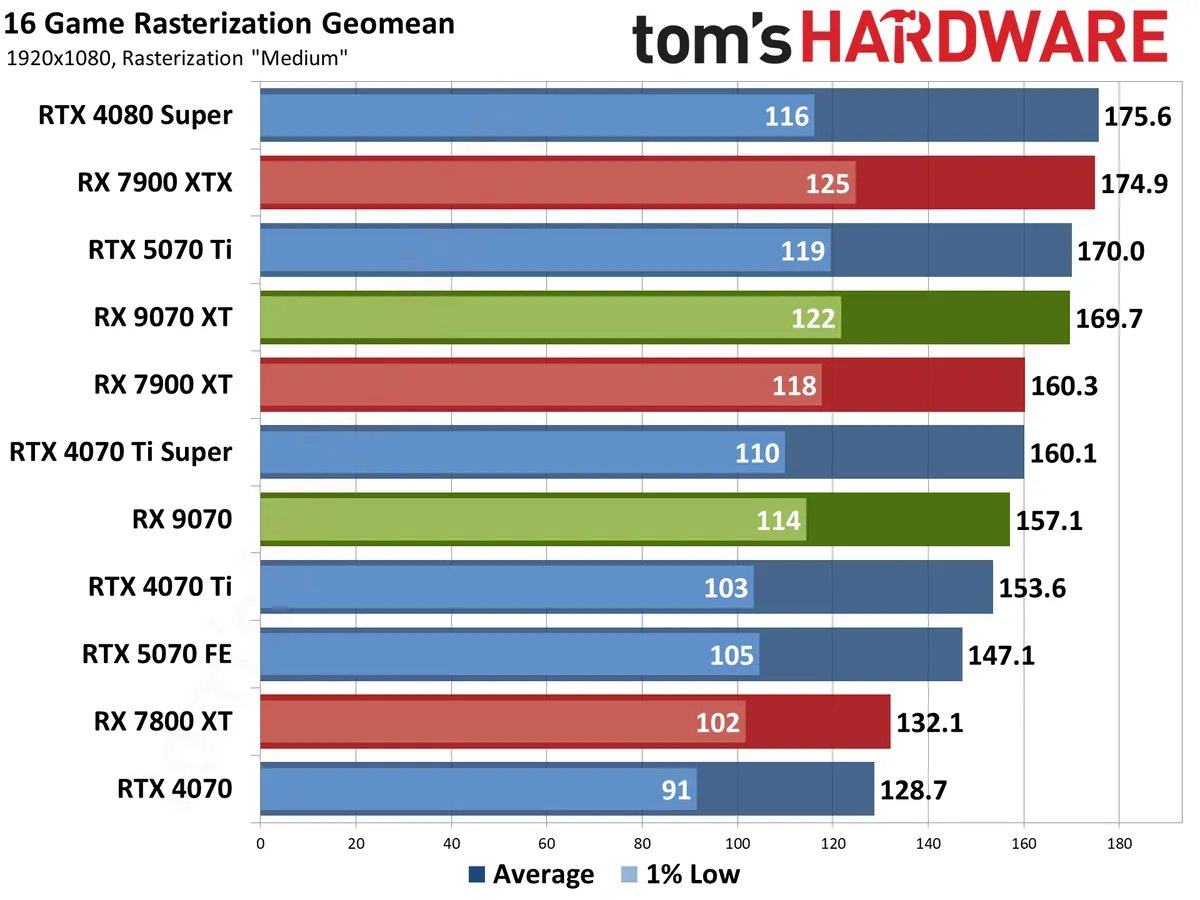
Dalam pengujian kami, kami menemukan bahwa GPU menawarkan rasio harga terhadap kinerja yang sangat baik, kinerjanya hampir sama baiknya dengan Nvidia RTX 5070 Ti, yang saat ini dihargai lebih dari $700. Dibandingkan dengan andalan AMD generasi sebelumnya, RX 7900 XTX, kecepatannya hanya sekitar 5% lebih lambat pada pengaturan 4K Ultra dan hanya 3% lebih lambat pada pengaturan Medium 1080p. GPU ini juga mengungguli RX 7900 XT sebesar 5–10%, menawarkan performa lebih tinggi dibandingkan GPU generasi terakhir yang awalnya diluncurkan dengan harga $750.
Jika Anda tidak peduli dengan rangkaian fitur berbasis AI Nvidia, Radeon RX 9070 XT harus menjadi pilihan karena menawarkan keseimbangan harga, kinerja, dan efisiensi yang luar biasa bagi para penggemar yang tidak ingin menghabiskan banyak uang untuk GPU mereka. Dapatkan kesepakatan ini sekarang — tersedia untuk waktu terbatas.
Jika Anda mencari lebih banyak penghematan, lihat kami Penawaran Perangkat Keras PC terbaik untuk berbagai produk, atau selami lebih dalam spesialisasi kami Penawaran SSD dan Penyimpanan,Penawaran Hard Drive, Penawaran Monitor Gaming, Penawaran Kartu Grafisatau Penawaran CPU halaman.
Starcloud sudah meluncurkan satelit yang dilengkapi AI dengan GPU Nvidia H100 ke luar angkasa bulan depan. Namun, mereka berencana untuk membangun pusat data berkapasitas 5 gigawatt pada akhirnya, dan Rendezvous Robotics dapat menjadi kunci untuk mencapai hal tersebut. Berbicara kepada Ars Technica, salah satu pendiri Phil Frank berkata, “Misi kami adalah membangun benda-benda yang akan berguna di luar angkasa.”
Pusat data telah menjadi tren baru setelah booming AI, dengan para pendukungnya yang ingin memperluas komputasi dengan kecepatan eksponensial yang melampaui kemampuan kita untuk membangunnya. Hal ini juga memerlukan energi dan pendinginan dalam jumlah besar, yang berpotensi menimbulkan dampak buruk terhadap lingkungan, dan ini hanya salah satu dampaknya. Sebaliknya, ruang angkasa hampir tak terbatas dengan reaktor fusi bebas di pusat tata surya kita yang tidak pernah mati—mulai terdengar seperti sebuah rencana, bukan? Banyak perusahaan lain juga berpikiran sama, dan berkumpul untuk menjajaki peluang penting ini.
Tantangan yang dihadapi lebih sulit daripada yang terlihat karena, tidak seperti satelit atau teleskop, pusat data pada dasarnya tidak bersifat mobile. Secara historis, semua upaya kami terfokus pada membangunnya di lahan dengan lokasi konstruksi luas yang tidak mungkin dilakukan di luar atmosfer kita. Oleh karena itu, penerapan pusat data di luar angkasa memerlukan kecerdikan dan efisiensi dalam skala yang belum pernah dicapai sebelumnya — di sinilah Rendezvous Robotics dapat membantu. Perusahaan konstruksi luar angkasa ini lahir di MIT tahun lalu dan muncul secara sembunyi-sembunyi pada bulan September ini dengan putaran pra-benih.
Beberapa bulan kemudian, mereka baru saja menandatangani perjanjian dengan Starcloud, yang bermitra dengan Nvidia, untuk menjajaki peluang pusat data di luar angkasa. Ketiga perusahaan tersebut merupakan bagian dari koalisi yang memikirkan kembali bagaimana fasilitas komputasi dapat bekerja di era baru.
Produk andalan Rendezvous adalah sistem modul otonom berbasis ubin yang dapat dirakit sendiri. Pada dasarnya, ubin dengan komponennya sendiri, seperti sel baterai, prosesor, dan lainnya, yang menggunakan elektromagnet untuk dibuka setelah digunakan sebagai muatan dari pesawat ruang angkasa. Apa yang Anda lihat pada gambar di atas adalah ubin-ubin yang ditumpuk satu sama lain, siap untuk dipisahkan dari roket dan terbentuk sendiri. Teknologi ini didasarkan pada Proyek TESSERAE dari MIT Media Lab, yang arsiteknya, Ariel Ekblaw, adalah salah satu pendiri Rendezvous Robotics. NASA telah menguji TESSERAE, namun para pendiri bermaksud mengubahnya menjadi usaha komersial, menjual teknologi tersebut ke perusahaan arsitektur luar angkasa (seperti Starcloud).
Artis Rendering TESSERAE di orbit sekitar Mars (Kredit gambar: TU Dortmund / MIT Media Lab)
Joe Landon, yang terakhir dari tiga pendiri, mengklarifikasi bahwa “Anda harus mengirim seseorang dengan kunci pas ke luar angkasa untuk berkumpul, menggunakan lengan robot dan merencanakan setiap gerakan lengan itu, atau merancang sistem mekanis pelipatan origami yang rumit, yang membatasi seberapa besar Anda dapat membangun.” Ketiga teknik itulah yang dapat digantikan oleh karya Rendezvous, dan teknologi ini dirancang agar dapat diskalakan ke ukuran yang sangat besar, sempurna untuk impian makhluk luar angkasa berupa GPU AI yang bekerja bersama satelit kita. Sebagai bagian dari perjanjian ini, Starcloud dan Rendezvous akan bekerja sama untuk menyesuaikan ubin untuk pusat data 5 gigawatt secara khusus.
Starcloud mengatakan pusat datanya akan menggunakan “panel surya dan pendingin super besar dengan lebar dan panjang sekitar 4 kilometer,” yang secara astronomis lebih besar dari apa pun yang pernah dibuat manusia sebelumnya. Ars Technica menghitung bahwa susunan tenaga surya Stasiun Luar Angkasa Internasional – yang terbesar yang pernah ditempatkan di luar angkasa – hanya berukuran 0,005% dari apa yang direncanakan Starcloud untuk dibangun. Inilah sebabnya mengapa perakitan otonom menjadi suatu kebutuhan; pada skala ini, teknik konvensional (seolah-olah segala sesuatu yang berhubungan dengan ruang angkasa adalah hal biasa) tertinggal ribuan tahun, dan uang AI tidak berhenti untuk apa pun.
Dapatkan berita terbaik dan ulasan mendalam Tom's Hardware, langsung ke kotak masuk Anda.
Cukup meningkatkan skala satelit Starlink V3, yang memiliki tautan laser berkecepatan tinggi, sudah cukup. SpaceX akan melakukan ini.31 Oktober 2025
Anda dapat melihat tanggapan Elon Musk terhadap liputan asli di atas, yang mengklaim bahwa satelit V3 Starlink “akan melakukan hal ini”, dan tampaknya ini juga relatif mudah. Satelit V2 yang saat ini berada di orbit membatasi kecepatan transmisi data maksimum sebesar 100 Gbps, yang mana satelit V3 mendatang akan meningkat menjadi 1 Tbps. Melalui Starlink, SpaceX telah menunjukkan bahwa mereka dapat menyediakan internet berkecepatan tinggi bahkan hingga ke wilayah terpencil di dunia. Oleh karena itu, bukanlah hal yang belum pernah terjadi sebelumnya bahwa pusat data berskala besar ada dalam pikiran orang-orang terkaya di dunia. Berbeda dengan Starcloud dan Rendezvous Robotics, kami memerlukan lebih banyak detail di sini sebelum berspekulasi tentang apa yang akan terjadi di masa depan.
Mengikuti Perangkat Keras Tom di Google Beritaatau tambahkan kami sebagai sumber pilihanuntuk mendapatkan berita, analisis, & ulasan terbaru kami di feed Anda.
T hanksg ivivining
20%
0% OFF
ANY ONE ITEM $50 OR LESS
AN
SS
WITH COUPON. OFFER VALID THRU 11/18/2025.
Sale items excluded, one coupon per customer, per day.
Other exclusions may apply. See store for details.
(Maximum discount $10.00)
*Only available at Ed Youngâs Ace Hardware
5641 Main St. at Mill Williamsville
Phone: 716-632-3150 | edyoungs.com
New Jersey, US State: “The global Open Source Enterprise Social Network Software market in the Information Technology and Telecom category is projected to reach USD 2.5 billion by 2031, growing at a CAGR of 10.5% from 2025 to 2031. With rising industrial adoption and continuous innovation in Information Technology and Telecom applications, the market is estimated to hit USD 1.2 billion in 2024, highlighting strong growth potential throughout the forecast period.”
Open Source Enterprise Social Network Software Market Size & Forecast 2031
The open source enterprise social network software market is experiencing notable growth as organizations increasingly adopt collaborative platforms to enhance communication, knowledge sharing, and employee engagement. Open source solutions offer flexibility, cost efficiency, and customization options that empower businesses to tailor their social intranets and collaboration tools according to specific workflows. The demand for transparent and scalable systems that integrate with existing enterprise applications is driving adoption across industries such as IT, education, and manufacturing. As remote and hybrid work models become standard, enterprises are leveraging open source platforms to create virtual communities, streamline project discussions, and support innovation through real-time collaboration. The rise of cloud deployment, API integrations, and mobile accessibility further boosts the relevance of these solutions in modern digital workplaces.
By 2031, the global open source enterprise social network software market is projected to expand significantly, supported by growing demand for decentralized collaboration tools and data ownership control. Businesses are prioritizing open frameworks that enable secure communication without vendor lock-in, encouraging widespread adoption among small and mid-sized enterprises. Continuous enhancements in user experience, workflow automation, and AI-driven content recommendations are expected to elevate productivity and engagement across distributed teams. Integration with HR systems, project management tools, and analytics dashboards is strengthening the software’s role in enterprise digital ecosystems. Subscription-based support models and community-driven innovation will continue to fuel market growth, as organizations seek transparent, interoperable, and secure collaboration environments that align with their digital transformation strategies.
Key Players in the Open Source Enterprise Social Network Software Market
Red Hat
Slack Technologies
Mattermost
OpenProject
HumHub
Rocket.Chat
Jive Software
XWiki
Zulip
Moodle
Tiki Wiki CMS Groupware
For Further Detail, Download the Sample PDF with Complete TOC, Tables, Figures, Charts, And More @
Factors Supporting Growth of Open Source Enterprise Social Network Software Market in the Future:
1.Technological Advancements and Innovation:
The continuous evolution of technology is playing a vital role in driving the Open Source Enterprise Social Network Software market forward. Cutting-edge innovations are improving product functionality, enhancing performance, and reducing costs, making these solutions more accessible to a broader range of industries. Emerging technologies such as AI, IoT, advanced analytics, and automation are also enabling smarter and more efficient use cases, further expanding the scope of the market. These advancements are not only upgrading existing systems but are also creating entirely new application opportunities that will support long-term market expansion.
2. Expanding Applications Across End-Use Sectors:
The increasing integration of Open Source Enterprise Social Network Software solutions across diverse industries such as automotive, healthcare, consumer electronics, telecom, and industrial manufacturing is significantly boosting market demand. Each sector brings unique requirements, pushing companies to diversify their offerings and customize solutions. This cross-industry relevance ensures consistent demand growth, while rising digitalization and adoption of smart technologies amplify the market potential across both developed and developing regions.
3. Favorable Government Policies and Infrastructure Push:
Supportive initiatives by governments around the world, including funding programs, tax incentives, and policy frameworks, are providing a strong foundation for market development. Efforts to strengthen digital infrastructure, promote energy efficiency, and drive sustainable development are fueling demand for advanced Open Source Enterprise Social Network Software technologies. Moreover, public-private partnerships and national transformation agendas such as smart cities and Industry 4.0 are creating favorable conditions for rapid market expansion, especially in emerging economies
4. Increased Investment and Focus on Research & Development:
The Open Source Enterprise Social Network Software market is experiencing a surge in investment from both private and public entities, driven by the urgency to innovate and stay competitive. Companies are dedicating substantial resources to research and development to create next-generation products with higher efficiency, scalability, and environmental sustainability. Venture capital funding, mergers, acquisitions, and collaborations are also contributing to a dynamic ecosystem that fosters experimentation and accelerates commercialization of novel solutions, ensuring sustained market growth in the future.
To avail a discount on the purchase of this report visit the link @ https://www.marketresearchintellect.com/ask-for-discount/?rid=1066955&utm_source=OpenPr-Oct&utm_medium=895
Key Segments Covered in Our Report: Open Source Enterprise Social Network Software Industry
Open Source Enterprise Social Network Software Market by Deployment Type
On-Premises
Cloud-Based
Open Source Enterprise Social Network Software Market by Application
Internal Communication
Collaboration
Knowledge Management
Project Management
Employee Engagement
Open Source Enterprise Social Network Software Market by End-User
SMEs
Large Enterprises
Government Organizations
Educational Institutions
Non-Profit Organizations
The Application segment showcases the industries and sectors that use Open Source Enterprise Social Network Software products for example Open Source Enterprise Social Network Software targeting healthcare and automotive industries etc. It also provides a perspective of the market rate of acceptance, usage of the products, and new applications that are paving the way for the future of the market.
Global Open Source Enterprise Social Network Software Market Regional Analysis
The Global Open Source Enterprise Social Network Software Market is examined in dimensions of regions, wherein each region has its own market growth, trends as well as dynamics. This section highlights on the detailed market performance, major shifts, and trends and underlying factors explaining growth in different places around the world.
North America: North America accounts for a large share of the Open Source Enterprise Social Network Software market which is a result of the developed technology, intense consumer market, and huge investments in the Open Source Enterprise Social Network Software industry. To add, the U.S. market also plays a crucial role as this economy is more concerned with innovation and was also one of the first to implement Open Source Enterprise Social Network Software products in its Open Source Enterprise Social Network Software sectors. The region is expected to see a gradual rise till 2031 and this is because of its reinforced infrastructure and existing regulation mechanisms.
Europe: Global has the fastest growing Open Source Enterprise Social Network Software market and is oriented around environmental protection, renewed efforts and environmental awareness. The market is dominated by countries like Germany, the UK, and France that have improved their technologies and have a strong industrial structure. Increased request for green solutions along with regulatory efforts are increasing demand in the market’s key areas such as Open Source Enterprise Social Network Software sectors.
Asia-Pacific: The growth potential in the Open Source Enterprise Social Network Software market is expected to be maximum for Asia-Pacific region. Increased maturation, urban migration as well as expanding middle class in China, India, and Japan and other developing economies are great constituents of market growth. Further, there is an increasing contribution to investments in the Open Source Enterprise Social Network Software sector which is increasing the demand for Open Source Enterprise Social Network Software regions-supplying throughout the area.
Rest of the World: Countries and areas like Latin America, Middle East & Africa have also been showing moderate Open Source Enterprise Social Network Software market growth. Although still developing, these markets are fueled by a fast increasing infrastructure, expending industrial activities and growing consumer demand for Open Source Enterprise Social Network Software goods. These regions pose great opportunities for the market players to tap into other sources of growth.
Frequently Asked Questions (FAQ) – Open Source Enterprise Social Network Software Market
Q1: What is the anticipated growth rate of the Global Open Source Enterprise Social Network Software Market?
A1: With a growth rate of CAGR of 10.5%, the Global Open Source Enterprise Social Network Software Market is anticipated to reach USD 2.5 billion by 2031. Industrial demand and innovation will lead it to reach USD 1.2 billion by 2024.
Q2: Which regions provide the highest growth opportunities for the Open Source Enterprise Social Network Software Market?
A2: Asia-Pacific is likely to provide the highest growth prospects based on speedy industrialization and infrastructure growth, followed by robust markets in Europe and North America.
Q3: Which are the primary drivers of market growth?
A3: The primary drivers are technology innovation, growing industrial applications, heightened government initiatives, and expanding use of Open Source Enterprise Social Network Software solutions in different industries.
Q4: What are the challenges faced by the Open Source Enterprise Social Network Software Market?
A4: The challenges are tight regulatory systems, high upfront capital expenditures, fragmentation of the market in the emerging markets, and geopolitical risks in some regions.
Q5: Which are the major players in the Global Open Source Enterprise Social Network Software Market?
A5: The market has a number of leading players with a focus on innovation, strategic alliances, and global expansion.
Q6: How does innovation influence the Open Source Enterprise Social Network Software Market?
A6: Market growth is driven by innovation, which enhances product efficiency, lowers costs, and facilitates new applications, making the overall market potential broader.
Q7: Which industries utilize Open Source Enterprise Social Network Software products mostly?
A7: Major industries include manufacturing, automotive, energy, electronics, and infrastructure, among others, where Open Source Enterprise Social Network Software solutions deliver operational efficiency and sustainability.
Q8: How is the market anticipated to change after 2031?
A8: Although projections beyond 2031 are uncertain, continued technological advancement and increasing industrial demand are expected to continue supporting long-run growth patterns.
For More Information or Inquiries, Visit @ https://www.marketresearchintellect.com/product/open-source-enterprise-social-network-software-market/?utm_source=Linkedin&utm_medium=895
“About Us: Market Research Intellect
Market Research Intellect is a leading Global Research and Consulting firm servicing over 5000+ global clients. We provide advanced analytical research solutions while offering information-enriched research studies. We also offer insights into strategic and growth analyses and data necessary to achieve corporate goals and critical revenue decisions.
Our 250 Analysts and SMEs offer a high level of expertise in data collection and governance using industrial techniques to collect and analyze data on more than 25,000 high-impact and niche markets. Our analysts are trained to combine modern data collection techniques, superior research methodology, expertise, and years of collective experience to produce informative and accurate research.”
Should you have any queries, please contact us as follows:
The global commercial real estate software market was valued at approximately USD 2.7 billion in 2024 and is projected to reach USD 6.1 billion by 2034, growing at a CAGR of 8.5% during the forecast period.
Download Full PDF Sample Copy of Market Report @ https://exactitudeconsultancy.com/request-sample/75872
This market’s growth reflects the increasing adoption of digital tools across real estate portfolios, with software now serving as the backbone for portfolio management, operational intelligence, and client experience enhancement. Cloud platforms and AI-powered analytics are enabling property owners and asset managers to optimize occupancy rates, manage financial performance, and make data-driven investment decisions.
Key Market Drivers
1. Digital Transformation in Real Estate: The push toward automation, analytics, and remote management is reshaping CRE operations.
2. Rising Investment Complexity: Multi-location portfolios require centralized software platforms for efficient property and tenant oversight.
3. Demand for Smart Building Solutions: Integration with IoT and building management systems enhances sustainability and cost control.
4. Shift Toward Cloud and SaaS Models: Cloud-based platforms reduce IT overhead and enable seamless collaboration.
5. Regulatory and Financial Transparency Requirements: Software ensures compliance with accounting, safety, and environmental regulations.
Key Market Challenges
1. High Implementation Costs: Large-scale software integrations and data migration can be expensive for smaller firms.
2. Data Security Concerns: Cloud-based systems are vulnerable to cybersecurity threats without robust encryption and compliance protocols.
3. User Resistance and Legacy Systems: Transitioning from manual to automated processes can face internal resistance.
4. Integration Complexity: Interoperability between different software modules (ERP, CRM, BMS) can pose challenges.
5. Shortage of Skilled IT Staff in CRE Firms: The gap between real estate expertise and digital proficiency can slow adoption.
Leading Players
Prominent players in the commercial real estate software market include:
• Yardi Systems, Inc.
• MRI Software, LLC
• Oracle Corporation
• CoStar Group, Inc.
• RealPage, Inc.
• Altus Group Limited
• SAP SE
• AppFolio, Inc.
• Buildout, Inc.
• Ascendix Technologies
These companies focus on AI-driven analytics, cloud integration, and predictive maintenance solutions, helping real estate professionals maximize returns and reduce operational friction.
Segmentation Analysis
By Software Type
• Property Management Software
• Asset Management Software
• Lease Management Software
• Facility Management Software
• Customer Relationship Management (CRM)
• Real Estate Investment & Portfolio Analytics Platforms
By Deployment Mode
• Cloud-Based (SaaS)
• On-Premises
By End User
• Property Managers
• Real Estate Developers and Builders
• Investors and Asset Managers
• Corporate Real Estate Departments
• Government and Institutional Users
By Application
• Office Spaces
• Retail Complexes
• Industrial Facilities and Warehouses
• Hospitality and Healthcare Buildings
• Mixed-Use Developments
By Region
• North America
• Europe
• Asia-Pacific
• Latin America
• Middle East & Africa
Segmentation Summary:
Property and asset management software currently dominate market share due to rising demand for digital lease and maintenance tracking. Cloud-based deployment has overtaken on-premises solutions thanks to scalability, remote accessibility, and cost-effectiveness. The fastest-growing segment is AI-powered analytics platforms, which are transforming investment strategies and operational decision-making across CRE portfolios.
Explore Full Report here: https://exactitudeconsultancy.com/reports/75872/commercial-real-estate-software-market
Regional Analysis
North America
North America holds the largest share of the global commercial real estate software market, driven by strong digital adoption across property management and leasing firms. The U.S. leads in innovation, with widespread implementation of integrated SaaS platforms for multi-site portfolio management. The region’s focus on sustainability and ESG reporting also encourages adoption of smart building management tools.
Europe
Europe represents a mature market with advanced regulations promoting transparency and green building compliance. The U.K., Germany, and France lead software uptake for asset optimization, financial reporting, and tenant experience management. Cloud-based and mobile-first platforms are helping real estate organizations improve operational visibility across cross-border portfolios.
Asia-Pacific
Asia-Pacific is the fastest-growing regional market, supported by rapid urbanization, infrastructure expansion, and rising commercial property investments. Countries such as China, Japan, India, and Singapore are adopting CRE software to manage sprawling real estate assets, track occupancy, and streamline maintenance. Government smart city initiatives are further accelerating software integration into commercial infrastructure projects.
Middle East & Africa
MEA is emerging as a high-potential region, particularly within the Gulf Cooperation Council (GCC) countries, where large-scale real estate and tourism projects require efficient digital management tools. Smart city developments in Dubai, Riyadh, and Doha are fueling demand for real estate software with IoT and building automation features.
Latin America
Latin America’s commercial real estate sector is modernizing rapidly, led by Brazil and Mexico. The growing presence of international investors and large-scale retail and logistics projects is encouraging regional adoption of cloud-based property management and financial tracking platforms.
Regional Summary:
While North America and Europe remain innovation hubs, Asia-Pacific is expected to deliver the most substantial growth by 2034. Smart cities, data-driven construction, and the digitalization of property ecosystems are defining regional opportunities.
Market Dynamics
Key Growth Drivers
1. Digitalization of Property Operations: Automation reduces manual errors, accelerates lease workflows, and enhances tenant engagement.
2. Data-Driven Decision-Making: Predictive analytics and AI models empower investors to forecast occupancy, rent trends, and asset performance.
3. Smart Infrastructure and IoT Integration: Building automation systems connected with CRE software enable real-time energy monitoring and maintenance.
4. Remote Work and Hybrid Models: Changing office dynamics are prompting real-time space utilization tracking and flexible lease management.
5. Increased Demand for ESG and Compliance Tools: Companies are adopting sustainability analytics for environmental and social governance reporting.
Key Challenges
1. Complex Legacy Infrastructure: Integrating modern software into outdated property management systems can delay implementation.
2. Cybersecurity Threats: Data breaches and ransomware attacks pose significant risks for cloud-based platforms.
3. High Initial Investments: Small and mid-sized property firms often face budget limitations.
4. Change Management Issues: Organizational inertia can hinder digital transformation.
5. Customization Barriers: One-size-fits-all software often fails to meet the specific needs of diverse property portfolios.
Emerging Trends
• AI and Machine Learning Analytics: Predictive insights for rent forecasting, property valuation, and risk mitigation.
• Blockchain for Secure Transactions: Smart contracts and transparent leasing operations.
• Digital Twins: Virtual property replicas enhancing facility planning and maintenance.
• PropTech Ecosystems: Integration of CRM, ERP, and IoT data into unified dashboards.
• Mobile and Cloud-Native Platforms: Mobile-first solutions enabling property managers to oversee portfolios in real-time.
Get Your Exclusive Offer with up to 10% Discount : https://exactitudeconsultancy.com/checkout/?currency=USD&type=single_user_license&report_id=75872
Competitive Landscape
The commercial real estate software market is moderately consolidated, with established players dominating enterprise portfolios and startups disrupting with niche technologies.
Strategic Initiatives
1. AI-Powered Enhancements: Integration of predictive analytics and automated valuation models.
2. Mergers & Acquisitions: Expansion of product capabilities and market presence through strategic acquisitions.
3. Cloud Partnerships: Collaborations with cloud service providers (AWS, Azure, Google Cloud) for scalability.
4. Regional Expansion: Focus on Asia-Pacific and emerging markets through localized offerings.
5. Sustainability Modules: Incorporation of carbon tracking, energy analytics, and LEED compliance tools.
Competitive Summary:
Leading vendors are transitioning from standalone property management tools to comprehensive real estate intelligence platforms. Companies that offer scalable, user-friendly, and secure SaaS ecosystems – with AI, IoT, and data visualization capabilities – are expected to dominate the next growth phase.
Conclusion
The commercial real estate software market is redefining how property assets are managed, analyzed, and monetized. With an estimated growth from USD 2.7 billion in 2024 to USD 6.1 billion by 2034, the industry is entering a new era of connected, intelligent, and sustainable real estate operations.
Key Takeaways
• Digitization is Inevitable: The future of real estate lies in automation, data analytics, and cloud connectivity.
• Asia-Pacific Will Lead Growth: Rapid urban expansion and smart city projects drive adoption.
• AI and Predictive Analytics Dominate: Real-time forecasting enhances investment and maintenance strategies.
• Sustainability Integration: ESG and energy tracking modules are now critical for long-term asset value.
• User Experience Is Central: Simplified dashboards, mobile access, and tenant engagement tools define competitive differentiation.
In conclusion, the global shift toward digital-first property management marks a defining moment for the real estate sector. Commercial real estate software has evolved from a back-office tool to a strategic enabler – one that delivers transparency, efficiency, and intelligence across every square foot of managed space. Over the next decade, those who embrace digital transformation will shape the future of real estate performance and sustainability.
This report is also available in the following languages : Japanese (商業用不動産ソフトウェア), Korean (상업용 부동산 소프트웨어), Chinese (商业房地产软件), French (Logiciel immobilier commercial), German (Software für Gewerbeimmobilien), and Italian (Software immobiliare commerciale), etc.
Request for a sample of this research report at (Use Corporate Mail ID for Quick Response) @ https://exactitudeconsultancy.com/reports/75872/commercial-real-estate-software-market#request-a-sample
Exactitude Consultancy is a market research & consulting services firm which helps its client to address their most pressing strategic and business challenges. Our market research helps clients to address critical business challenges and also helps make optimized business decisions with our fact-based research insights, market intelligence, and accurate data.
Tinggal beberapa minggu lagi kita akan memasuki Black Friday, yang sering kali merupakan waktu paling gila dalam setahun bagi para pembeli, ketika pengecer menurunkan harga beberapa teknologi termahal di dunia (terkadang) dengan harga yang sangat rendah.
Namun, beberapa tidak mau menunggu Black Friday, karena Walmart telah meluncurkan diskon 13% untuk laptop gaming HP Victus RTX 4050, mengurangi MSRP-nya dari $899,99 menjadi $779,99 untuk waktu terbatas.
HP Victus adalah laptop ramah anggaran yang ideal untuk bermain game PC saat bepergian. (Kredit gambar: Masa Depan)
Beberapa gamer PC menginginkan laptop gaming terbaik di pasaran untuk menjalankan judul PC AAA dengan pengaturan grafis terbaik, sementara yang lain sangat puas dengan mendapatkan perangkat keras yang lebih murah untuk menjalankan game PC yang lebih sederhana, dan melindungi anggaran mereka untuk hal-hal yang lebih penting seperti makanan dan membayar tagihan. Game 4K bukan untuk semua orang.
Laptop gaming Victus dari HP melayani konsumen gaming PC yang hemat anggaran, berkat MSRP $899,99 yang sederhana untuk laptop kelas menengah sekaligus mengemas daya entry-level yang cukup untuk menjalankan sebagian besar game PC kelas menengah dan indie.
Dengan AMD Ryzen 7 7445HS yang dipasangkan dengan NVIDIA GeForce RTX 4050, ia akan menjalankan game AA dan indie pada pengaturan grafis tinggi tanpa hambatan. (Kredit gambar: Windows Central)
HP Victus hadir dengan layar 15,6 inci, 144Hz, RAM 16GB, penyimpanan 512GB, dan prosesor AMD Ryzen 7 7445HS yang dipadukan dengan GPU NVIDIA GeForce RTX 4050.
Dengan spesifikasi ini, ditambah dengan DLSS NVIDIA untuk meningkatkan frame rate dan dukungan AMD Free Sync Premium untuk mencegah robeknya layar, Anda akan dapat meluncurkan hampir semua game indie dari PC Game Pass dengan sempurna dengan resolusi 1080p yang tajam dan gameplay yang mulus.
Namun, jangan berharap laptop ini menjalankan judul PC AAA yang haus grafis seperti Cyberpunk 2077 atau Battlefield 6 secara maksimal, tetapi Anda dapat mengubah pengaturan grafisnya mendekati level terendah.
Jadi, jika Anda menginginkan laptop gaming yang terjangkau dan sangat kompeten untuk memainkan banyak game PC saat bepergian, seperti Clair Obscur: Expedition 33 atau Hollow Knight: Silksong, maka Anda tidak salah dengan RTX 4050 Victus.
Victus dari HP saat ini dijual seharga $779,99 di Walmart, lebih murah $30 daripada Best Buy's sebenarnya Diskon Black Friday sebesar $809,00.
Ini juga memiliki penjualan yang sedikit lebih murah seharga $754,49 di Amazon, tetapi stok laptop gaming HP Victus di Amazon sangat rendah saat ini, dibandingkan dengan ketersediaan Walmart yang lebih besar pada saat penulisan.
Pertanyaan Umum
Apakah layar 144Hz mendukung game yang berjalan di atas 60 FPS?
Ya. Layar gaming 15,6 inci pada laptop ini secara umum berfungsi dengan baik dalam menghasilkan 60 FPS yang solid pada resolusi 1080p, namun berkat kecepatan refresh maksimum 144Hz, layar tersebut dapat mencapai lebih tinggi jika game memungkinkan.
Bisakah saya mengupgrade penyimpanan laptop ini?
Ya. Anda dapat meningkatkan Penyimpanan HP Victus dengan mengganti SSD M.2 NVMe-nya.
Berapa daya tahan baterai laptop HP Victus?
Laptop ini melaporkan masa pakai baterai 1 hingga 1,5 jam saat bermain game atau 6 hingga 8 jam untuk browsing umum dan pekerjaan kantor sebelum perlu diisi ulang melalui pengisi daya USB-C dan USB-A, menurut HP.
Apakah HP Victus cocok untuk bepergian?
Secara umum, ya, untuk perjalanan bisnis atau liburan sesekali, berkat ukuran layar standar 15,6″ yang membantunya masuk ke dalam tas laptop biasa. Meskipun mungkin merepotkan untuk perjalanan jauh, jauh atau sering bepergian karena bobotnya yang berat yaitu 2,29Kg dan paket pengisi daya bank daya besar yang disertakan menambah bobot (0,45kg) pada bagasi Anda sekaligus menghabiskan lebih banyak ruang.
Kapan Black Friday dimulai?
Black Friday secara resmi jatuh pada tanggal 28 November 2025, Jumat terakhir setiap bulan, dan segera setelah Thanksgiving. Namun, banyak pengecer, termasuk Walmart, telah meluncurkan diskon lebih awal, masih bertema liburan.
Mengikuti Windows Central di Google Berita untuk selalu menampilkan berita, wawasan, dan fitur terkini kami di bagian atas feed Anda!
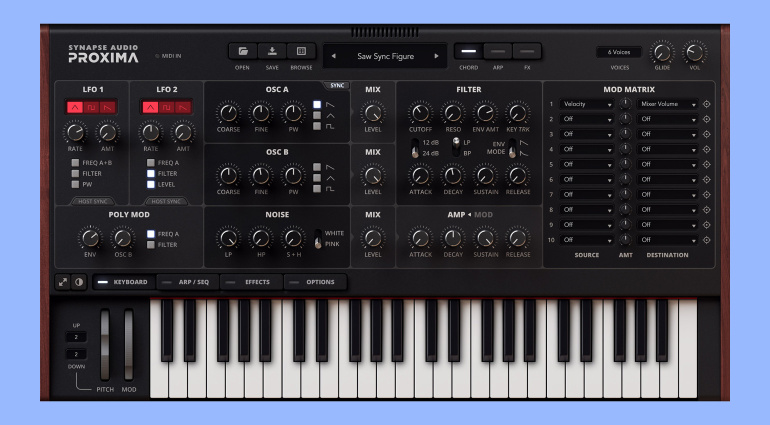
Synapse Audio Proxima menghadirkan suara Sequential Circuits Prophet-600 yang ikonik ke DAW Anda. Polisinta kuno dari awal tahun 80an telah ditingkatkan dengan banyak fitur baru.
Sinaps Audio Proxima
Synapse Audio terkenal dengan emulasi synth vintage klasik berkualitas tinggi—bahkan Hans Zimmer mengandalkan keahlian perusahaan untuk The Legend HZ yang mengesankan, emulasi Minimoog yang ditingkatkan. Upaya terbaru Synapse Audio, Kedekatandidedikasikan untuk suara Rangkaian Sekuensial Nabi-600 dari tahun 1982 – pada saat itu, synth pertama dengan MIDI onboard.
Anda sedang melihat konten placeholder dari YouTube. Untuk mengakses konten sebenarnya, klik tombol di bawah. Harap diperhatikan bahwa tindakan ini akan membagi data dengan penyedia pihak ketiga.
Informasi Lebih Lanjut
Menurut Synapse Audio, suara dan karakter aslinya telah ditiru secara tepat di tingkat komponen. Ini termasuk keduanya osilator serta yang klasik Filter lowpass Nabi. Namun, pengembang telah mengambil kebebasan untuk melakukan beberapa penambahan pada bagian filter. Berbeda dengan aslinya, Proxima menawarkan lereng filter yang dapat diganti (12/24 dB/Oktober) dan tambahan mode bandpass. Itu polifoni juga telah berlipat ganda menjadi 12 suara.
Anda sedang melihat konten placeholder dari YouTube. Untuk mengakses konten sebenarnya, klik tombol di bawah. Harap diperhatikan bahwa tindakan ini akan membagi data dengan penyedia pihak ketiga.
Informasi Lebih Lanjut
Selain itu, perangkat lunak synth menawarkan beberapa peningkatan lain dibandingkan aslinya. Selain klasik Mod Poli bagian, Synapse Audio Proxima hadir dengan dua LFO khusus. A Matriks mod 10 slot menawarkan banyak fleksibilitas untuk menetapkan sumber dan tujuan modulasi.
Proxima juga berisi komprehensif arpeggiator Dan sequenceryang juga dapat berfungsi sebagai sumber modulasi hingga lima tujuan. Selain itu, ada bagian efek dengan distorsi, EQ, Phaser, Chorus, Reverb, dan Delay. Synth perangkat lunaknya adalah Kompatibel dengan MPE dan mendukung penyetelan mikro Dan NK.
Harga dan Kompatibilitas
Synapse Audio Proxima kini tersedia dari Thomann* untuk $132 / £120 / €135. Synth perangkat lunak berjalan macOS 10.14 atau lebih tinggi Dan Windows 7 SP1 atau lebih tinggi di dalam VST3, AU, dan AAX format.
Informasi Lebih Lanjut
*Postingan ini berisi tautan afiliasi dan/atau widget. Saat Anda membeli produk melalui mitra afiliasi kami, kami menerima komisi kecil yang membantu mendukung apa yang kami lakukan. Jangan khawatir, Anda membayar harga yang sama. Terima kasih atas dukungan Anda!
Ingatkah Anda ketika pepatah teknologi konsumen yang berlaku adalah 'lebih kecil lebih baik'? Dan ternyata ada yang namanya juga kecil, karena kita terus kehilangan teknologi yang hebat tapi kecil? Dihadapkan dengan banyaknya instalasi Windows saat ini, saya berharap para penjaja perangkat lunak tertentu berkomitmen pada filosofi serupa yaitu 'lebih sedikit lebih baik'. Yang menggembirakan adalah, salah satu pembuat teknologi telah mendorong Windows 7 ke batas-batasnya yang kecil.
Pengguna X @XenoPanther membagikan Windows 7 x86 versi 69 MB yang baru saja melakukan booting (melalui The Register). Dibuat lebih hanya untuk melihat apakah mereka bisa daripada sebagai OS yang benar-benar dapat digunakan, @XenoPanther menulis, “Hampir tidak ada yang dapat berjalan karena file penting yang hilang seperti kotak dialog umum dan kontrol umum.”
Ini hanyalah upaya terbaru dari serangkaian upaya tidak resmi untuk mengecilkan Windows. Tahun lalu, kami melihat pembuat perangkat lunak lain mengecilkan Windows 11 menjadi hanya 100 MB dengan menjadikannya kemunduran ke era DOS-nya. GUI? Siapa yang membutuhkannya!
Adapun sesuatu yang benar-benar dapat digunakan, proyek nano11 mengubah Windows 11 menjadi instalasi 2,29 GB yang agak ramping dengan 'secara agresif' menghapus bloat seperti integrasi Xbox dan Windows Defender. Dengan Windows 10 memasuki masa senja bulan lalu, proyek sumber terbuka seperti nano11 menawarkan lebih dari sekadar hal baru.
Saya telah merilis Windows 7 x86 versi 69,0MB. Anda perlu menyediakan file sistem Anda sendiri untuk menjalankan beberapa program paling dasar sekalipun. Daftar file: https://t.co/xAqTob4uPxUnduh: https://t.co/v5CdxtRZre pic.twitter.com/8GcQjRDcjn29 Oktober 2025
Misalnya, jika Anda belum siap untuk berbicara terlalu lama tentang mesin Windows 10 yang kurang bertenaga dan tidak cukup memenuhi persyaratan sistem OS baru, selalu ada Rufus. Alat gratis ini tidak hanya memungkinkan Anda dengan cekatan menghindari banyak kesalahan instalasi Windows 11, tetapi bahkan dapat digunakan untuk beralih ke instalasi Linux.
Siapa pun yang menunggu instalasi SteamOS untuk rig mereka harus membaca fitur terbaru Josh tentang waktunya bersama Bazzite di desktop gamenya. Namun, sayangnya, seperti yang diketahui Jacob sendiri di Gamescom tahun ini, Linux pastinya juga bukan untuk semua orang (walaupun ada orang gila yang berhasil menjalankannya pada prosesor dari 1971). Namun, dengan berlanjutnya pembaruan keamanan Windows 10 yang disertai dengan persyaratan, sekarang mungkin adalah waktu yang tepat untuk menjelajahi cara OS lainnya.
Ikuti terus kisah-kisah terpenting dan penawaran terbaik, seperti yang dipilih oleh tim PC Gamer.




 media=”https://cdn.mos.cms.futurecdn.net/rrQomjdLumb44urYnebref.webp”/>


 software Market by Type”/>
 software Industry”/>
 media=”https://cdn.mos.cms.futurecdn.net/uuoAxkvb6KNmQD9Yu4AeVK.jpg” class=”expandable”/>